Website Health & AI Visibility: Why Security, HTTPS and Accessibility Decide If AI Trusts You
Before AI can cite you, it has to reach and trust you. Here's how website health — security, HTTPS, clean robots/sitemap and accessibility — underpins your AI visibility, and how to check it in one scan.
Site health is the floor under your AI visibility
You can write perfect answer-first content and mark it up with flawless schema — but if AI crawlers can't safely reach your page, none of it counts. Generative engines and search only cite sources they can reach and trust. A site that's served over broken HTTPS, flagged for malware, or blocked by a misconfigured robots.txt simply never enters the answer.
That's why technical health sits underneath everything in GEO and AEO. A fast, secure, well-configured site is the foundation your content and entity signals stand on. The quickest way to see where you stand is a free scan with VitalSite, a website health scanner that grades your site across security, visibility and accessibility.
The health signals AI and search actually care about
VitalSite checks three pillars of a healthy site. Each one maps directly to whether an AI engine will crawl, trust and cite you.
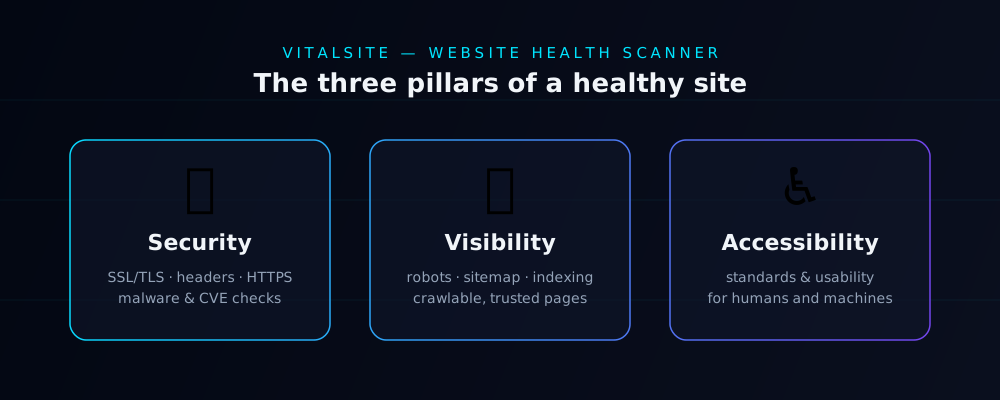
Security & trust: the signals that keep you in the index
Start with the basics that browsers, Google and AI crawlers all reward. Confirm HTTPS is enforced site-wide and your SSL/TLS certificate is valid — an expired cert or mixed content triggers warnings that push both users and crawlers away.
Then check your security headers (HSTS, CSP and friends). They signal a well-maintained, trustworthy site and block the kinds of attacks that can get you blacklisted. And a single Google Safe Browsing flag can remove you from search results and AI answers entirely — worth knowing before your customers do.
Visibility plumbing: robots, sitemap and indexability
This is where website health overlaps most with AI visibility. A misconfigured robots.txt or sitemap can quietly block the exact AI crawlers you want citing you — GPTBot, ClaudeBot, PerplexityBot — or hide half your pages from discovery. VitalSite's visibility checks catch these before they cost you citations.
It's the same lesson we cover in our robots.txt guide for AI crawlers and technical SEO checklist: the plumbing has to be right before the content can flow.
Check your health, then your AI visibility
Run a free scan at vitalsite.io/scan to grade your site's security, visibility and accessibility and get a prioritized list of fixes. For teams that want continuous monitoring and deeper checks, VitalSite's paid plans add history and alerts.
Then pair it with a GeoPageScan audit for the complete picture: VitalSite tells you if your site is healthy and reachable; GeoPageScan tells you if AI actually understands and cites you. Fix the foundation, then win the answer.
How each health signal gates your AI visibility
| Health signal | Why AI & search care |
|---|---|
| Valid SSL / enforced HTTPS | Insecure pages are distrusted, down-ranked, and browsers warn users away |
| Security headers (HSTS, CSP) | Signal a maintained, trustworthy site; block attacks that get you blacklisted |
| No malware / blacklist flags | A Safe Browsing flag can remove you from search and AI answers entirely |
| Clean robots.txt & sitemap | Misconfiguration can block AI crawlers or hide pages from discovery |
| Accessible, semantic markup | Clean HTML is easier for crawlers and AI to parse and quote |